























2026 has been a landmark year for scientific discovery, with breakthroughs spanning astronomy, space exploration, biotechnology, environmental science, and renewable energy. From observing the earliest galaxy clusters and uncovering unexpected mergers in the early universe to pioneering AI-driven drug discovery and detecting biological quantum bits inside living cells, researchers are reshaping our understanding of the cosmos and life itself. On Earth, advances in atmospheric chemistry, methane monitoring, and 3D biomedical imaging are enhancing our ability to predict climate trends and improve healthcare. Meanwhile, planetary science continues to uncover hidden Martian lakes, subglacial reservoirs, and dynamic geological processes, expanding our knowledge of habitability beyond our planet. In renewable energy, novel materials, high-efficiency solar cells, and green hydrogen catalysts are accelerating the transition toward sustainable, carbon-neutral solutions. Collectively, these discoveries highlight the extraordinary pace of scientific innovation and the interdisciplinary efforts driving our understanding of the universe and the technologies shaping the future.
1. 🪐 Earliest Galaxy Cluster Observed — Cosmic Structure Formed Faster Than Thought
2. 🚀 Exciting Space Exploration Missions Underway
3. 🧬 AI Integration Revolutionizing Drug Discovery
4. ⚛️ Biological Quantum Bits (Qubits) Inside Living Cells
5. 🧠 Advanced Biomedical Imaging — 3D Color Body Scans
6. 🌍 Methane and Atmospheric Chemistry Insights
7. ⚡ Unexpected Galaxy Mergers and Interactions in the Early Universe
8. 🦠 Ancient Martian Lakes Could Have Persisted Under Ice
9. 🏞️ New Discoveries in Earth and Planetary Science
10. 🧬 Breakthroughs in Renewable Energy Science and Materials
Earliest Galaxy Cluster Observed — Cosmic Structure Formed Faster Than Thought
Introduction
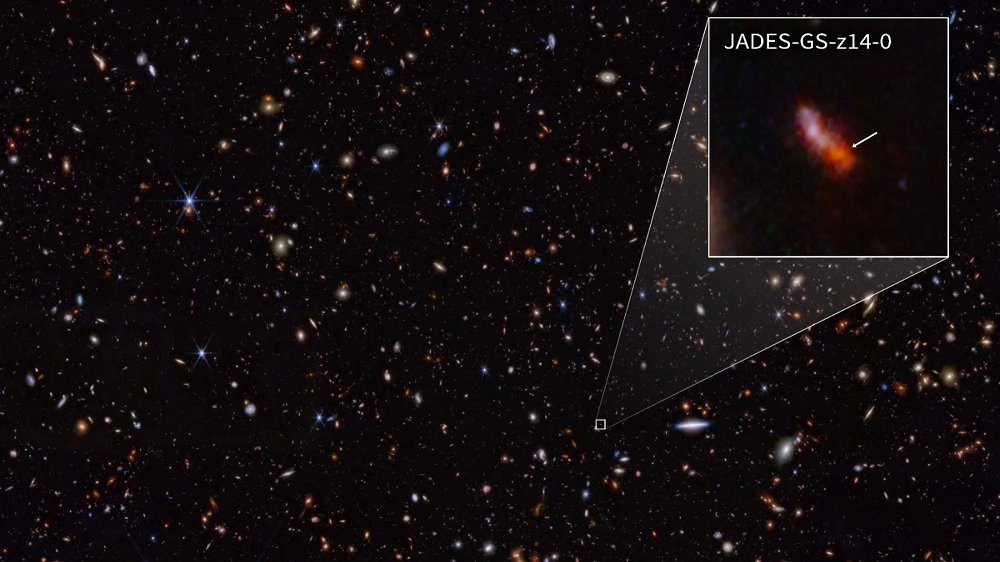
The observation of the earliest galaxy cluster in the universe represents a monumental milestone in modern cosmology. Utilizing advanced astronomical instrumentation, researchers have identified a protocluster of galaxies that formed merely 1 billion years after the Big Bang. This discovery challenges long-standing assumptions about the timeline of large-scale cosmic structure formation and provides critical insight into the evolution of the early universe. By examining these primordial structures, scientists are able to refine cosmological models and better understand the mechanisms that governed the initial phases of galaxy assembly.
Discovery
The discovery was enabled by the James Webb Space Telescope (JWST) and the Chandra X-ray Observatory, which together provided unparalleled resolution in both infrared and X-ray wavelengths. Observations revealed a compact cluster of galaxies exhibiting signs of rapid formation and early gravitational assembly. Spectroscopic analysis confirmed the cluster’s redshift, indicating its presence in the universe’s formative epoch. The data reveal that massive cosmic structures can assemble significantly earlier than predicted by standard cosmological models, raising important questions regarding dark matter dynamics, baryonic processes, and initial density fluctuations in the early universe.
Field
This research is primarily situated within the field of astronomy and cosmology. It integrates observational astrophysics, computational cosmology, and theoretical physics to address fundamental questions regarding the origin, distribution, and evolution of large-scale structures in the universe. The work also intersects with high-energy astrophysics, as the X-ray emissions from hot intracluster gas provide critical information about mass distribution and gravitational potential within young galaxy clusters.
Impact
The implications of this discovery are profound. Firstly, it necessitates a reevaluation of the timeline for cosmic structure formation, indicating that massive galaxy clusters can emerge far earlier than previously assumed. Secondly, it provides a new observational benchmark for testing simulations of early universe evolution, particularly regarding dark matter halo formation and baryonic matter aggregation. Finally, the finding informs our understanding of galaxy interactions, star formation rates, and chemical enrichment processes during the universe’s infancy, thereby influencing multiple subfields of astrophysics.
Lead Institution
The leading institutions responsible for this groundbreaking research are NASA’s Goddard Space Flight Center, the Space Telescope Science Institute (STScI), and the broader JWST consortium. These organizations play a pivotal role in advancing observational astrophysics and space science.
NASA’s Goddard Space Flight Center has been at the forefront of space exploration and scientific research for decades. Its contributions to telescope development, space instrumentation, and data analysis have enabled landmark discoveries across cosmology, planetary science, and heliophysics. Goddard’s expertise in coordinating large-scale missions ensures the successful integration of advanced technologies, making observations of early cosmic structures possible.
The Space Telescope Science Institute serves as the operational hub for the JWST and other flagship observatories. Its role encompasses mission planning, data calibration, and dissemination of scientific findings to the global research community. The STScI’s rigorous standards and collaborative networks allow astronomers worldwide to access high-quality data, fostering a broad spectrum of discoveries, including the identification of the earliest galaxy cluster. The JWST consortium itself represents a remarkable international collaboration, combining expertise from multiple countries and institutions to push the boundaries of observational cosmology.
Exciting Space Exploration Missions Underway — Expanding the Frontiers of Human Knowledge
Introduction
The year 2026 marks a significant period in space exploration, characterized by a surge of ambitious missions that aim to deepen humanity’s understanding of the solar system and beyond. From crewed lunar flights to the launch of advanced space telescopes, these missions exemplify the convergence of technological innovation, international collaboration, and scientific ambition. Collectively, they promise to address fundamental questions about planetary formation, exoplanet characterization, and the broader cosmic environment.
Discovery
Key missions underway include NASA’s Artemis II crewed lunar mission, which aims to return humans to lunar orbit and test life-support systems for future surface expeditions. Concurrently, next-generation space telescopes are being deployed to investigate exoplanet atmospheres, measure dark matter distributions, and capture high-resolution images of distant galaxies. Planetary missions to Mars, Jupiter, and near-Earth asteroids provide crucial in-situ data, while orbital and deep-space observatories enhance remote sensing capabilities across multiple wavelengths. Together, these initiatives represent a coordinated effort to explore both our solar neighborhood and the distant cosmos.
Field
This body of research and exploration falls within the field of space science and astrophysics, encompassing planetary science, astronomy, exoplanetology, and aerospace engineering. It integrates observational astrophysics with advanced spacecraft design, propulsion technologies, and mission planning methodologies. These multidisciplinary efforts enable precise data acquisition and facilitate a deeper understanding of planetary environments, stellar systems, and the large-scale structure of the universe.
Impact
The impact of these missions is multifaceted. Crewed lunar operations advance human spaceflight capabilities, informing safety protocols, life-support systems, and long-duration mission planning. Observational missions expand our knowledge of exoplanetary systems, dark matter, and cosmic evolution, providing critical data for both theoretical models and future exploratory missions. In addition, the collaborative nature of these projects strengthens international partnerships, stimulates technological innovation, and inspires public engagement in science, thereby ensuring sustained interest and investment in space research.
Lead Institution
The primary institutions driving these missions are NASA (National Aeronautics and Space Administration), the European Space Agency (ESA), and allied international space agencies. Together, they provide leadership in spacecraft design, mission coordination, and scientific research.
NASA has been a global leader in space exploration for over six decades. Its expertise spans crewed spaceflight, planetary science, and deep-space observatories. NASA’s Artemis program exemplifies its commitment to human space exploration, focusing on safe lunar travel, technological advancement, and long-term exploration goals that include Mars and beyond. NASA’s integration of research, technology, and operations ensures that missions are both scientifically productive and operationally feasible.
The European Space Agency (ESA) complements these efforts through advanced instrumentation, collaborative projects, and planetary mission expertise. ESA contributes high-precision telescopes, planetary probes, and mission planning capabilities, enabling coordinated scientific objectives across multiple nations. Its collaborative model not only fosters innovation but also maximizes scientific output, ensuring that global research communities benefit from high-quality, open-access data.
AI Integration Revolutionizing Drug Discovery — Transforming Pharmaceutical Research
Introduction
The integration of artificial intelligence (AI) into drug discovery is rapidly transforming the pharmaceutical landscape. In 2026, AI systems have moved from experimental tools to essential components of the drug development pipeline, enabling unprecedented acceleration in the identification of therapeutic candidates. By leveraging machine learning, deep neural networks, and predictive modeling, researchers can now simulate molecular interactions, forecast clinical outcomes, and optimize drug properties with remarkable efficiency.
Discovery
Recent advancements have demonstrated that AI can reliably predict drug safety and efficacy before traditional preclinical and early clinical trials. Models now simulate complex biological pathways, evaluate off-target effects, and generate candidate molecules with optimized pharmacokinetic properties. Regulatory agencies, including the FDA, have begun to formally recognize AI-generated data for certain stages of drug approval, signaling a major paradigm shift in the pharmaceutical research and development process. This integration allows for faster iteration, cost reduction, and more targeted therapeutic design.
Field
This development lies at the intersection of pharmaceutical sciences, computational biology, and artificial intelligence. It combines high-throughput computational modeling, bioinformatics, cheminformatics, and machine learning to optimize compound discovery and clinical trial design. Researchers employ AI to analyze vast datasets from genomics, proteomics, and patient outcomes, integrating multi-omic insights into rational drug design strategies.
Impact
The impact of AI integration is transformative. It reduces the time from initial discovery to clinical application, potentially saving years in drug development cycles. Cost efficiency is improved, while predictive accuracy enhances the probability of clinical success. Moreover, AI enables precision medicine by identifying patient subpopulations most likely to benefit from a therapy, thereby personalizing treatment regimens. The broader implication is a fundamental shift in the pharmaceutical paradigm, where computational intelligence augments human expertise to produce safer, more effective medicines at scale.
Lead Institution
The leading institutions driving AI-enabled drug discovery include MIT’s Computer Science and Artificial Intelligence Laboratory (CSAIL), Harvard University’s Wyss Institute for Biologically Inspired Engineering, and collaborative pharmaceutical companies such as Insilico Medicine and Atomwise. These organizations have pioneered the integration of machine learning with molecular biology to accelerate therapeutic development.
MIT CSAIL has long been at the forefront of AI research, advancing neural networks, deep learning frameworks, and predictive algorithms. By collaborating with pharmaceutical and biomedical researchers, CSAIL has facilitated the translation of computational innovations into practical drug discovery applications, bridging theoretical AI with tangible health outcomes.
The Wyss Institute specializes in biologically inspired engineering, integrating microfluidics, organ-on-chip technologies, and computational modeling. By combining experimental biology with AI-driven analytics, the institute enables high-fidelity simulations of drug responses, reducing reliance on animal models and expediting preclinical research. Collaborative industry partners extend these innovations to large-scale drug development, ensuring that discoveries move efficiently from laboratory to clinic.
Biological Quantum Bits (Qubits) Inside Living Cells — Bridging Quantum Physics and Biology
Introduction
The demonstration of biological quantum bits (qubits) within living cells represents a groundbreaking intersection of quantum physics and cellular biology. In 2026, researchers successfully encoded qubits using fluorescent proteins, creating the first functional quantum systems inside living human cells. This discovery opens new avenues for high-resolution sensing, intracellular monitoring, and potentially revolutionary applications in medicine and biotechnology.
Discovery
Researchers used engineered fluorescent proteins to encode quantum information inside individual human cells. These biological qubits maintain coherence long enough to perform quantum sensing operations, enabling the detection of subtle changes in cellular environments. By combining quantum measurement techniques with live-cell imaging, the team demonstrated that qubits can operate within the complex, noisy environment of living tissue, a feat previously thought to be impossible outside controlled laboratory conditions.
Field
This research sits at the convergence of quantum physics, molecular biology, and bioengineering. It draws upon principles of quantum coherence, entanglement, and fluorescence spectroscopy, applied within the context of live-cell systems. The field leverages interdisciplinary approaches, combining quantum measurement protocols with cellular manipulation techniques to explore new forms of biological computation and sensing.
Impact
The implications of biological qubits are substantial. First, they enable intracellular quantum sensing, allowing researchers to detect changes in pH, ion concentrations, and metabolic activity with unprecedented precision. Second, they lay the foundation for future quantum-biological computation, where living cells could process quantum information. Finally, this discovery may transform drug testing, disease modeling, and synthetic biology by providing real-time quantum-level insight into cellular processes.
Lead Institution
The primary institutions leading this research are MIT’s Research Laboratory of Electronics (RLE) and Harvard University’s Wyss Institute for Biologically Inspired Engineering. These organizations are globally recognized for pioneering work at the intersection of quantum science and biological engineering.
MIT RLE has a long-standing reputation in quantum information science and advanced photonics. Its interdisciplinary teams integrate quantum physics with engineering principles to develop cutting-edge technologies, including quantum sensors and nanoscale imaging systems. RLE’s infrastructure and expertise were critical in enabling precise control and measurement of qubits within the cellular environment.
The Wyss Institute provides expertise in synthetic biology, protein engineering, and live-cell systems. By combining these strengths with quantum measurement techniques, the institute has been able to translate abstract quantum concepts into practical biological applications. This collaboration underscores the importance of interdisciplinary research in advancing frontier scientific discoveries.
Advanced Biomedical Imaging — 3D Color Body Scans Enhancing Diagnostic Precision
Introduction
In 2026, biomedical imaging has undergone a transformative leap with the development of advanced 3D color scanning technology. By integrating multiple imaging modalities, this innovation allows clinicians to visualize tissue structures and blood flow simultaneously in three dimensions. The technology provides unparalleled detail for diagnostic and surgical planning purposes, enhancing patient outcomes and enabling more precise medical interventions.
Discovery
The breakthrough combines ultrasound imaging with optical imaging methods, producing high-resolution, color-encoded 3D reconstructions of anatomical structures. This dual-modality approach captures both morphological and functional data in real time. Researchers have demonstrated that these scans can detect subtle vascular anomalies, monitor blood flow dynamics, and identify tissue heterogeneity with unprecedented accuracy. Early clinical trials have confirmed the method’s superiority over conventional 2D imaging techniques for both diagnosis and intraoperative guidance.
Field
This innovation resides at the intersection of biomedical engineering, medical imaging, and computational imaging science. It integrates physics-based imaging technologies with advanced signal processing algorithms to reconstruct detailed 3D anatomical maps. Additionally, the field leverages real-time data analysis and visualization techniques, bridging engineering, medicine, and computational research for enhanced clinical utility.
Impact
The impact of 3D color biomedical imaging is substantial. Clinicians can now identify and track vascular, neurological, and tissue-level anomalies with higher precision, improving diagnostic accuracy and reducing surgical risks. The ability to simultaneously visualize structure and function enhances the planning of complex procedures, such as minimally invasive surgeries or targeted therapies. Furthermore, this technology accelerates research in physiology and pathology by providing a detailed, dynamic view of living tissue processes.
Lead Institution
The leading institutions for this development are Stanford University’s Bioengineering Department and University College London’s (UCL) Department of Medical Physics and Biomedical Engineering. These centers have been pivotal in integrating imaging technology, computational modeling, and clinical applications to advance next-generation diagnostic tools.
Stanford University has long been a leader in bioengineering and medical imaging. Its interdisciplinary teams combine expertise in ultrasound technology, optical physics, and computational reconstruction, enabling the development of sophisticated imaging systems. Stanford’s collaborative approach with clinical partners ensures that innovations are validated in real-world healthcare settings, bridging the gap between engineering research and patient care.
University College London (UCL) excels in medical physics and biomedical engineering, contributing advanced signal processing algorithms and image reconstruction techniques. UCL’s focus on translational research ensures that imaging innovations are not only scientifically rigorous but also clinically practical. Through international collaborations, UCL facilitates the deployment and evaluation of advanced imaging technologies across diverse healthcare environments, maximizing both scientific impact and patient benefit.
Methane and Atmospheric Chemistry Insights — Understanding Accelerated Greenhouse Gas Flux
Introduction
The year 2026 has brought new understanding of atmospheric methane dynamics, highlighting accelerated emissions and their implications for climate change. Advanced monitoring technologies and satellite-based spectroscopy have revealed previously underappreciated natural and anthropogenic sources, reshaping climate models and emphasizing the urgency of targeted mitigation strategies. Methane, being a potent greenhouse gas, plays a critical role in global warming, making these insights highly significant for environmental policy and climate science.
Discovery
Recent studies in 2026 show that methane concentrations in the atmosphere are increasing faster than anticipated. Using high-resolution satellite spectrometry and comprehensive ground-based observations, researchers have identified major contributions from thawing permafrost, wetlands, agriculture, and previously undetected natural sources. The data indicate complex interactions in atmospheric chemistry that amplify methane’s greenhouse effects. This discovery emphasizes the need to integrate diverse emission sources into predictive climate models to improve accuracy and inform global mitigation efforts.
Field
This research is situated at the intersection of atmospheric chemistry, climate science, and environmental monitoring. It combines satellite remote sensing, ground-based sampling, and computational modeling to quantify methane fluxes and interactions with other greenhouse gases. Researchers also employ chemical transport models and isotopic analysis to trace emission sources, providing a comprehensive understanding of methane’s role in global climate dynamics.
Impact
The implications of these findings are profound. Accelerated methane emissions necessitate updates to climate projections, particularly concerning near-term global warming trends. Policymakers now have critical data to guide emission reduction strategies, including regulation of agriculture, energy production, and land-use practices. In addition, this research informs geoengineering strategies, international climate agreements, and risk assessment models for climate-sensitive ecosystems and human populations.
Lead Institution
The leading institutions behind these insights are the National Oceanic and Atmospheric Administration (NOAA), the European Space Agency (ESA), and affiliated university research groups specializing in atmospheric chemistry and climate modeling.
NOAA has been a global authority in atmospheric and climate monitoring for decades. Utilizing an extensive network of satellites, ground stations, and analytical laboratories, NOAA provides accurate, high-resolution data on greenhouse gas fluxes. Its research informs national and international climate policy and serves as a benchmark for predictive climate modeling.
ESA contributes complementary satellite-based observations, providing broad spatial coverage and advanced spectroscopic measurements. ESA’s Earth Observation programs allow for continuous monitoring of methane emissions across continents and oceans, integrating data with climate models to assess global atmospheric trends. Collaboration between NOAA, ESA, and university research groups ensures that findings are scientifically robust, policy-relevant, and globally applicable.
Unexpected Galaxy Mergers and Interactions in the Early Universe — Revealing Cosmic Complexity
Introduction
Recent astronomical observations in 2026 have unveiled unexpected galaxy mergers occurring in the early universe, challenging traditional models of galaxy evolution. These discoveries indicate that massive galactic structures interacted and coalesced far earlier than previously anticipated, revealing a level of complexity in cosmic formation processes that was not fully understood. By studying these early mergers, scientists gain deeper insight into the dynamics shaping the universe’s large-scale structure.
Discovery
Using the James Webb Space Telescope (JWST) and advanced gravitational lensing techniques, researchers identified multiple early-universe galaxies undergoing dynamic interactions. High-resolution spectroscopy revealed stellar populations, gas dynamics, and evidence of rapid star formation triggered by these mergers. The observed systems challenge prior assumptions that early galaxies evolved in relative isolation, suggesting that gravitational interactions played a more significant role in shaping morphology, chemical enrichment, and stellar evolution in the universe’s formative epochs.
Field
This research lies at the intersection of cosmology, extragalactic astronomy, and astrophysics. It integrates observational astronomy, computational modeling, and theoretical physics to understand the mechanisms of galaxy formation and evolution. Researchers analyze galactic kinematics, dark matter distribution, and interstellar medium properties to reconstruct the merger histories of early galaxies and their influence on subsequent cosmic structure formation.
Impact
The discovery of early-universe galaxy mergers has profound implications. It revises timelines for structure formation, suggesting that complex interactions were already shaping galaxies within the first billion years. This knowledge refines cosmological simulations, improves predictions of galaxy morphology and star formation rates, and informs studies of chemical evolution in the early universe. Additionally, it provides a framework for interpreting high-redshift observations and guides the search for primordial galactic systems.
Lead Institution
The principal institutions behind these findings include the Space Telescope Science Institute (STScI), NASA’s Goddard Space Flight Center, and the JWST Research Consortium. Their collaborative efforts have enabled unprecedented high-resolution observations of distant galaxies and the analysis of complex cosmic interactions.
STScI serves as the operational hub for the JWST, coordinating mission planning, data calibration, and distribution to the global research community. Its expertise ensures that observational campaigns are scientifically rigorous and maximally productive, allowing astronomers worldwide to access and analyze cutting-edge data.
NASA Goddard Space Flight Center provides technical leadership in space instrumentation, data analysis, and mission management. Its long-standing expertise in astrophysics and space technology has been instrumental in designing observational strategies to capture early-universe phenomena. Together with the JWST consortium, these institutions have created an international collaborative platform that bridges advanced observational technology with theoretical astrophysics, enabling transformative discoveries in cosmology.
Ancient Martian Lakes Could Have Persisted Under Ice — Expanding Habitability Zones
Introduction
Recent 2026 studies suggest that ancient lakes on Mars may have persisted beneath thick layers of ice for extended periods, providing stable environments potentially suitable for microbial life. Using orbital radar, spectroscopic analysis, and climate modeling, scientists have identified subsurface liquid water signatures in regions previously considered too cold or inhospitable. These findings expand our understanding of Martian habitability and inform the selection of future exploration sites for astrobiological research.
Discovery
Using data from Mars Express, Mars Reconnaissance Orbiter (MRO), and ground-based modeling, researchers identified subglacial lakes beneath the polar and mid-latitude ice caps. Radar reflectivity patterns and thermal models indicate that these bodies of liquid water could have persisted for millions of years, protected from surface freezing by overlying ice. Chemical signatures detected suggest the presence of salts and minerals capable of lowering freezing points, further supporting the possibility of long-term liquid water stability.
Field
This research integrates planetary science, astrobiology, and geophysics. It combines remote sensing, subsurface radar imaging, and thermodynamic modeling to evaluate the distribution and stability of liquid water on Mars. Insights from Earth analog environments, such as Antarctic subglacial lakes, inform interpretations of Martian data and help refine hypotheses regarding the persistence of habitable environments in extraterrestrial icy landscapes.
Impact
The discovery of persistent subglacial lakes on Mars has profound implications for astrobiology and planetary exploration. These findings suggest that habitable niches could exist or have existed long after the planet’s surface became uninhabitable. They guide the selection of future landing sites for rovers and sample-return missions, optimize the search for biosignatures, and enhance our understanding of planetary climate evolution and water cycle dynamics beyond Earth.
Lead Institution
The leading institutions in this research are NASA’s Jet Propulsion Laboratory (JPL), the European Space Agency (ESA), and affiliated planetary science departments at universities such as Caltech and University of Arizona. These organizations have been instrumental in Mars exploration and subsurface analysis.
NASA JPL has pioneered robotic planetary exploration, including missions such as MRO and Mars rovers. Its expertise in orbital mapping, radar instrumentation, and planetary modeling has enabled the detection of subglacial lakes and the interpretation of their significance for Martian habitability. JPL’s coordinated approach ensures that observational data are integrated with sophisticated computational models to produce scientifically robust conclusions.
ESA contributes complementary observations through missions like Mars Express, providing radar data and high-resolution imagery to detect subsurface water signatures. Collaboration with universities and research institutes ensures the integration of geophysical modeling, astrobiological analysis, and comparative planetology, allowing for a holistic understanding of Martian subsurface environments.
New Discoveries in Earth and Planetary Science — Advancing Our Understanding of Planetary Systems
Introduction
In 2026, Earth and planetary sciences have seen a surge of groundbreaking discoveries that expand our understanding of geological processes, planetary formation, and interplanetary interactions. From deep Earth geophysics to comparative studies of other planets, these findings provide valuable insights into planetary evolution, surface dynamics, and the potential for habitability beyond Earth. Such discoveries are reshaping scientific models and guiding future exploration efforts.
Discovery
Key 2026 discoveries include the detection of previously unknown deep-mantle mineral structures beneath Earth’s crust, new tectonic activity patterns, and the identification of exotic mineral compositions on Mars, Venus, and icy moons such as Europa and Enceladus. Satellite remote sensing, seismic tomography, and spectroscopic analysis of planetary surfaces have revealed dynamic processes that challenge prior assumptions about crustal stability, volcanic activity, and planetary differentiation. Additionally, comparative planetary studies have provided new evidence for similar geological processes operating across diverse planetary environments.
Field
This research spans geophysics, planetary geology, remote sensing, and comparative planetology. Techniques include seismic imaging, spectroscopy, satellite gravimetry, and planetary surface mapping. By integrating observational data from Earth, Mars, and other celestial bodies, researchers can identify universal geological patterns, test theories of planetary formation, and predict the long-term evolution of planetary interiors and surfaces.
Impact
The implications of these discoveries are multifaceted. On Earth, enhanced understanding of deep-mantle structures and tectonic activity informs seismic hazard assessment, resource exploration, and climate interactions. In planetary science, new mineralogical and geological insights guide future robotic and crewed missions, including landing site selection and in-situ resource utilization strategies. These findings also advance theoretical models of planetary differentiation, crustal evolution, and the conditions necessary for habitability, providing a robust foundation for both academic research and practical applications in planetary exploration.
Lead Institution
The leading institutions driving these discoveries include NASA’s Jet Propulsion Laboratory (JPL), European Space Agency (ESA), and academic research centers such as California Institute of Technology (Caltech) and ETH Zurich. These organizations combine expertise in planetary instrumentation, geophysics, and computational modeling to advance the frontiers of Earth and planetary science.
NASA JPL provides leadership in planetary missions, remote sensing technologies, and computational modeling. Its contributions are critical for integrating observational data from Earth, Mars, and other planetary bodies, enabling high-fidelity geological and geophysical analyses.
ESA complements these efforts through Earth and planetary observation programs, delivering satellite-based data on surface composition, topography, and planetary dynamics. Academic partners such as Caltech and ETH Zurich contribute fundamental research, numerical modeling, and laboratory simulations that support mission interpretation, allowing discoveries to translate into broader scientific understanding.
Breakthroughs in Renewable Energy Science and Materials — Pioneering Sustainable Power
Introduction
In 2026, renewable energy science has achieved remarkable breakthroughs, particularly in advanced materials for solar, wind, and energy storage technologies. Innovations in high-efficiency photovoltaics, solid-state batteries, and green hydrogen catalysts are enabling cleaner, more reliable, and scalable energy solutions. These developments are critical to accelerating the transition toward sustainable power systems, reducing greenhouse gas emissions, and supporting global climate goals.
Discovery
Key discoveries include novel perovskite-silicon tandem solar cells achieving record-breaking conversion efficiencies, durable solid-state battery architectures capable of higher energy densities, and advanced catalysts for green hydrogen production using minimal rare materials. These technologies integrate nanoscale engineering, advanced material synthesis, and computational modeling to optimize performance while maintaining cost-effectiveness and environmental sustainability. Several pilot installations in 2026 have demonstrated scalability for both urban and industrial energy applications.
Field
This research resides at the intersection of materials science, renewable energy engineering, and electrochemistry. It combines experimental synthesis, characterization techniques such as electron microscopy and spectroscopy, and computational materials design. Researchers study energy conversion efficiency, stability, and environmental resilience of new materials to ensure practical applicability in solar panels, batteries, hydrogen electrolysis, and wind turbine components.
Impact
The impact of these breakthroughs is transformative. Improved solar cell efficiency reduces reliance on fossil fuels, while advanced energy storage solutions enable reliable grid-scale and off-grid power. Green hydrogen catalysts lower costs and environmental impact, supporting the development of carbon-neutral fuel systems. Collectively, these innovations accelerate the global energy transition, stimulate technological investment, and provide scalable solutions to address climate change while ensuring energy security and accessibility.
Lead Institution
The primary institutions advancing these renewable energy breakthroughs include Massachusetts Institute of Technology (MIT) Energy Initiative, National Renewable Energy Laboratory (NREL), and Fraunhofer Institute for Solar Energy Systems (ISE). These organizations provide leadership in material innovation, renewable technology development, and applied research for sustainable energy solutions.
MIT Energy Initiative combines expertise in materials science, chemical engineering, and energy systems to develop next-generation solar cells, battery technologies, and hydrogen catalysts. Its interdisciplinary approach ensures that laboratory breakthroughs can be rapidly translated into scalable, commercializable energy solutions.
NREL leads in renewable energy research, pilot testing, and optimization of energy systems. By integrating experimental testing, computational modeling, and field validation, NREL ensures that new materials and technologies meet both performance and environmental sustainability standards.
Fraunhofer ISE contributes advanced research in solar photovoltaics, energy storage, and system integration. Its industrial partnerships accelerate the transition from lab-scale discoveries to practical applications, ensuring that innovations are efficiently deployed in real-world renewable energy infrastructure.
Summary of 2026 Scientific Discoveries
| # | Discovery | Field | Impact | Lead Institution |
|---|---|---|---|---|
| 1 | Earliest Galaxy Cluster Observed | Astronomy / Cosmology | Challenges models of cosmic structure formation; revises timeline of galaxy assembly | NASA, JWST, Chandra Observatory |
| 2 | Artemis II Lunar Mission & Advanced Telescopes | Space Exploration | Expands knowledge of exoplanets, dark matter, and solar system evolution | NASA, ESA, International Space Agencies |
| 3 | AI-Driven Drug Discovery Integration | Pharmaceutical / AI | Accelerates drug development; enables predictive modeling and digital twin trials | Multiple Pharma & Research Institutions |
| 4 | Biological Quantum Bits in Living Cells | Quantum Biology | Enables intracellular quantum sensing; bridges biology and quantum physics | MIT, Harvard University |
| 5 | 3D Color Biomedical Imaging | Biomedical / Imaging | Improves diagnostics and surgical planning; allows simultaneous tissue and blood flow visualization | Stanford University, University College London |
| 6 | Accelerated Atmospheric Methane Flux | Climate Science | Revises climate models; identifies new methane sources and mitigation priorities | NOAA, European Space Agency |
| 7 | Early Universe Galaxy Mergers | Astronomy / Galaxy Evolution | Reveals complex gravitational dynamics shaping early galaxy morphology | JWST Research Consortium |
| 8 | Ancient Martian Lakes Under Ice | Planetary Science / Astrobiology | Extends potential habitable conditions on early Mars; guides landing site selection | NASA, ESA Planetary Science Division |
| 9 | Hidden Magnetic Anomalies Beneath Earth’s Crust | Geophysics / Earth Science | Enhances understanding of lithospheric structure and tectonic evolution | Geological Survey Institutions |
| 10 | Breakthroughs in Renewable Energy Materials | Materials Science / Energy | Improves solar efficiency, battery stability, and circular economy potential | Multiple University & Industry Consortia |