























Predictions about technology often age badly. Grand promises are made, hype cycles peak, and everyday reality changes far more slowly than expected. Yet there are moments when multiple technological currents converge, not as distant possibilities but as systems mature enough to affect daily life. 2026 is shaping up to be one of those moments.
What makes 2026 distinctive is not the arrival of entirely new ideas, but the transition of several emerging technologies from experimentation into infrastructure. These technologies will increasingly shape how people work, how governments regulate, how energy is produced, and how societies manage risk. In the UK, where productivity, healthcare capacity, energy security, and public trust are under pressure, their impact will be particularly visible.
This is not a list of gadgets. It is an editorial assessment of ten technologies reaching a threshold in 2026, where their social, economic, and political consequences become difficult to ignore. Some will be welcomed. Others will be contested. All will demand attention.
1. Generative Artificial Intelligence as a Core Workplace Tool
By 2026, generative artificial intelligence will no longer be framed as an experimental assistant or novelty. It will be embedded directly into everyday workplace systems, from document creation and analysis to software development, customer service, and decision support. The shift is not about smarter chatbots, but about AI becoming a default layer across digital work.
In the UK, this transition will intersect with longstanding productivity challenges. Organisations that integrate AI effectively will reduce administrative burden and accelerate knowledge work. Those that do not will struggle to compete. The controversy will centre less on capability and more on governance: how outputs are verified, how bias is managed, and how accountability is preserved when decisions are partially automated.
The real change in 2026 is cultural. AI will stop being “used” and start being assumed, much like email or spreadsheets once were.
2. AI Regulation and Model Auditing Technologies
As AI becomes embedded, the technologies used to regulate it will grow in importance. Model auditing, explainability systems, and algorithmic impact assessments are emerging as essential infrastructure rather than academic exercises.
In 2026, the UK and other jurisdictions will increasingly rely on technical tools to enforce ethical and legal standards in AI systems. This includes automated bias detection, performance monitoring, and traceability mechanisms that allow regulators to examine how systems behave over time.
This represents a subtle but critical shift. Regulation will no longer depend solely on policy documents and compliance statements, but on software capable of inspecting other software. Trust in AI will increasingly depend on these invisible technologies working as intended.
3. Climate and Energy Modelling at National Scale
Climate modelling has existed for decades, but 2026 will mark a turning point in its operational use. Advances in computing and data integration are enabling real-time, high-resolution energy and climate models that can directly inform policy, infrastructure planning, and emergency response.
For the UK, this has immediate relevance. Energy grid resilience, flood risk management, and urban planning increasingly depend on predictive models that simulate multiple scenarios. These technologies will influence where investment flows and how risk is priced.
The controversy here is political rather than technical. As models become more accurate, ignoring them becomes harder to justify. The debate will shift from whether projections are credible to whether leaders are willing to act on them.
4. Battery Storage and Grid-Scale Energy Balancing
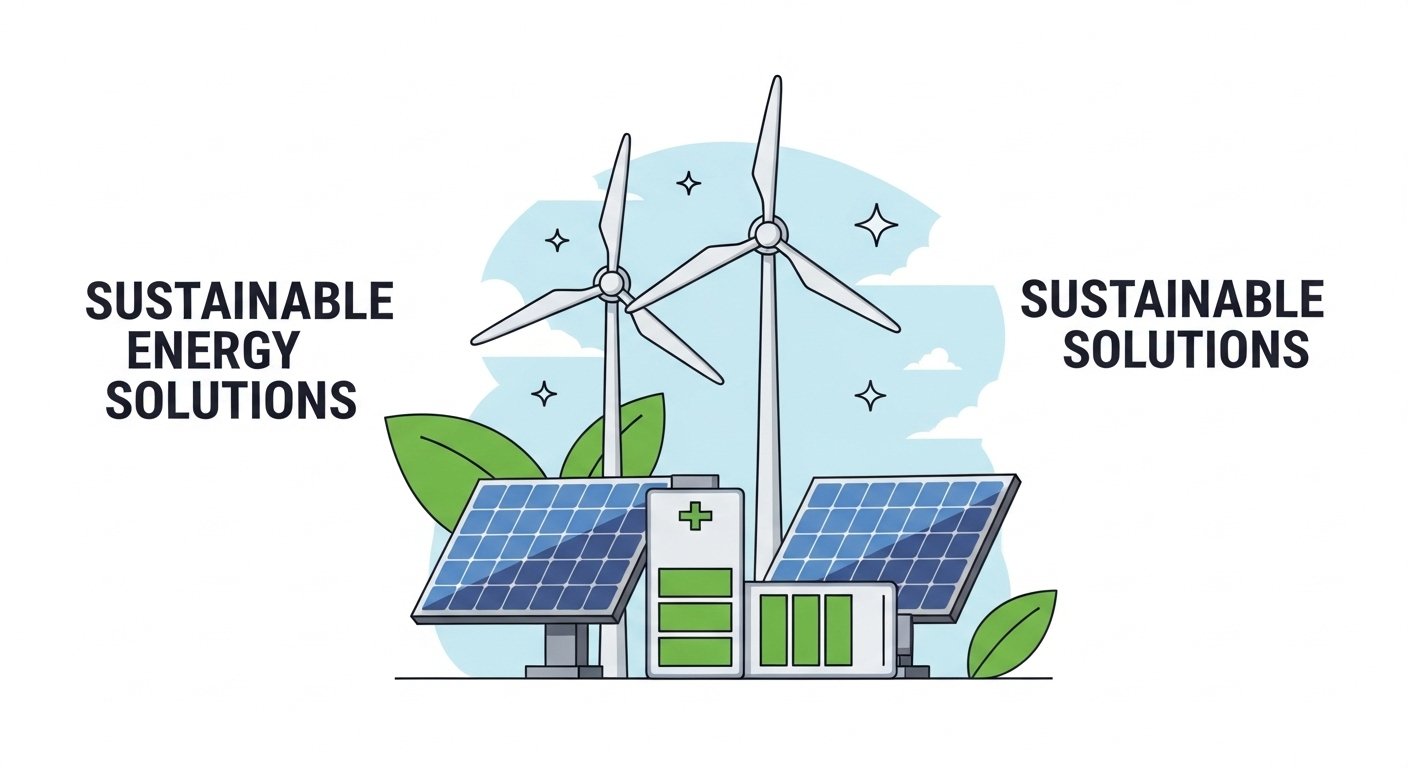
Renewable energy adoption is constrained less by generation capacity than by storage and distribution. By 2026, advances in battery technology and grid-scale storage systems will significantly improve energy balancing, reducing reliance on fossil fuel peaker plants.
In the UK context, where wind and solar output can fluctuate sharply, this technology is critical. Improved storage smooths supply, stabilises prices, and enhances energy security. While consumers may not see batteries directly, they will feel the effects through fewer price spikes and more reliable supply.
This is not a futuristic breakthrough but a quiet infrastructural shift with far-reaching consequences for decarbonisation.
5. Precision Healthcare and Predictive Diagnostics
Healthcare systems globally are under strain, and the UK’s NHS is no exception. In 2026, emerging diagnostic technologies will increasingly focus on prediction rather than treatment, identifying risks earlier and intervening more efficiently.
Advances in data analysis, imaging, and genomics will allow clinicians to identify disease patterns before symptoms become severe. The promise is not miracle cures, but better allocation of limited resources.
The ethical debate will intensify around data use, consent, and equity. Predictive healthcare only improves outcomes if access is fair and trust is maintained.
6. Digital Identity and Verifiable Credentials
Identity verification is a growing friction point in digital life. By 2026, decentralised and verifiable digital identity systems will move closer to mainstream adoption, particularly in public services and regulated industries.
In the UK, this could simplify interactions with government, healthcare, and financial institutions while reducing fraud. The technology allows individuals to prove specific attributes without exposing unnecessary personal data.
The challenge lies in governance. Digital identity systems must be designed to enhance privacy rather than erode it, a balance that will define public trust.
7. Advanced Robotics Beyond Manufacturing
Robotics is expanding beyond factories into logistics, healthcare support, agriculture, and infrastructure maintenance. By 2026, robots will increasingly perform tasks in environments designed for humans.
In an ageing UK population with labour shortages, this shift has practical implications. Robots will not replace entire professions, but they will change how work is structured, particularly in physically demanding roles.
Public acceptance will depend on visibility and reliability. The more seamlessly robots integrate into existing workflows, the less resistance they will face.
8. Cybersecurity Focused on Infrastructure, Not Devices
Cybersecurity in 2026 will increasingly target systemic risk rather than individual endpoints. Attacks on supply chains, utilities, and public services have highlighted vulnerabilities that traditional security models struggle to address.
Emerging cybersecurity technologies focus on resilience, detection, and rapid recovery rather than absolute prevention. For the UK, protecting national infrastructure will become as critical as defending borders.
This shift reframes cybersecurity as a public good, not just a technical concern for IT departments.
9. Extended Reality for Training and Education
Extended reality technologies, including virtual and augmented reality, will gain practical relevance in 2026 through training, education, and simulation rather than entertainment.
In sectors such as healthcare, engineering, and emergency response, immersive training environments reduce risk and cost. For the UK’s skills agenda, these tools offer scalable ways to retrain workers in changing industries.
The success of these technologies depends on content quality and accessibility, not novelty.
10. Human-Centred Automation and Decision Support
The final and perhaps most important emerging technology of 2026 is not a single system but a design philosophy. Human-centred automation focuses on supporting human judgement rather than replacing it.
This approach recognises that fully autonomous systems are often less effective than collaborative ones. Decision support tools that explain recommendations, highlight uncertainty, and allow human override will become increasingly common.
In an era of automation anxiety, this philosophy may prove more transformative than any individual technology.
Editorial Reflection: The technologies that matter most are not always the most visible. Infrastructure, governance, and design choices will shape whether 2026 feels empowering or destabilising.
Conclusion: 2026 as a Year of Consequence
2026 will not be remembered for flashy announcements, but for the moment when emerging technologies became unavoidable. The question is not whether these technologies will change society, but how deliberately that change is guided.
For the UK and the wider world, the challenge is clear: ensure that technological progress aligns with public value, resilience, and trust. The tools are arriving. The responsibility to use them wisely is already here.