






















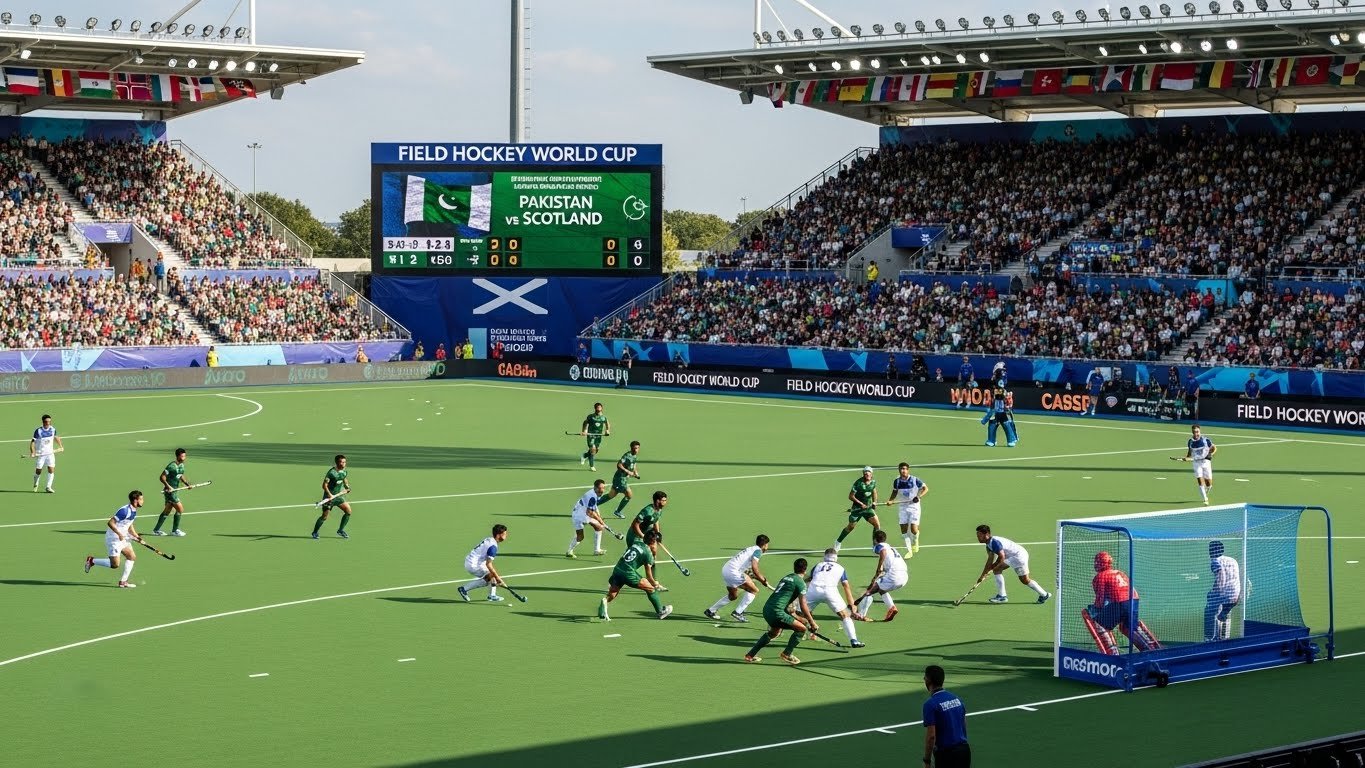
Field hockey is one of the most widely played team sports on earth, yet it remains relatively obscure in the global sports consciousness compared with football, cricket, or basketball. Often overshadowed by its frozen cousin, ice hockey, field hockey’s history, strategy, and international relevance are profound—and worthy of greater attention. In this opinion piece, we argue that the sport’s depth, heritage, and competitive global reach make “hockey” (in the field variation) unjustly overlooked. We will explore its global presence, competitive structure, major tournaments, and the institutions that govern it.
A Legacy Ignored: Field Hockey Through History
Field hockey is ancient in origin, with forms of stick‑and‑ball gameplay documented across early civilizations. Yet modern field hockey was formalized in 19th‑century England, codifying rules and organized competition. From there, it spread quickly through Europe, Asia, Africa, Oceania, and the Americas. Despite its global footprint, the sport has rarely commanded the media presence or commercial investment enjoyed by other Olympic sports, leading to its perception as a “second‑tier” game in many markets.
Advertisement
Worldwide Reach: Countries Playing Field Hockey
Field hockey is recognized in well over 100 countries, making it one of the most geographically diverse team sports globally. Its members include both traditional powerhouses and emerging nations. According to the International Hockey Federation’s category listings and certified fields data, national field hockey programs exist—or have existed—in countries including:
- Afghanistan
- Argentina
- Australia
- Belgium
- Canada
- Chile
- China
- Egypt
- France
- Germany
- India
- Ireland
- Japan
- Netherlands
- New Zealand
- Pakistan
- South Africa
- Spain
- United States
- Wales
- Malaysia
- Italy
- Scotland
- Belgium
- and many more across Africa, Asia, Europe, Oceania, and the Americas.
This list is far from exhaustive but demonstrates the sport’s global footprint. National field hockey associations operate development programs, leagues, and international teams—yet many remain unknown beyond their regional boundaries.
Field Hockey World Cup: Champions Through Time
The FIH Hockey World Cup is the premier international competition in field hockey, contested every four years by the world’s best national teams. Through its history, a limited set of teams have captured the title, underscoring both historic dominance and competitive evolution.
| Year | Winner |
|---|---|
| 1971 | Pakistan |
| 1973 | Netherlands |
| 1975 | India |
| 1978 | Pakistan |
| 1982 | Pakistan |
| 1986 | Australia |
| 1990 | Netherlands |
| 1994 | Pakistan |
| 1998 | Netherlands |
| 2002 | Germany |
| 2006 | Germany |
| 2010 | Australia |
| 2014 | Australia |
| 2018 | Belgium |
| 2023 | Germany |
Alongside the men’s World Cup, the women’s tournament has seen repeated success by the Dutch women’s team, which has dominated over multiple cycles. These documented winners illustrate how historic rivalries and deep national programs have shaped world hockey.
The 2026 FIH Hockey World Cup: Hosts and Expected Participants
The next men’s field hockey World Cup will take place from **14 to 30 August 2026**, jointly hosted by **Belgium and the Netherlands**, continuing hockey’s tradition of elite international competition. While the official list of all teams is finalized following qualifiers, qualification has already confirmed or projected many participants:
- Belgium (host)
- Netherlands (host)
- Australia (Pro League / ranking)
- Spain (Pro League / ranking)
- Argentina (Pan American Cup)
- Germany (EuroHockey)
- New Zealand (Oceania Cup)
- India (Asia Cup)
- South Africa (Africa Cup)
- Additional teams from qualifiers in Chile, Egypt, and India include France, Ireland, Korea, Wales, Scotland, Canada, Poland, Egypt, Pakistan, China, England, Japan, Italy, Uruguay, Wales, Austria.
For the women’s World Cup, a parallel qualification structure produces a similar blend of hosts, continental qualifiers, and teams from qualification tournaments. The final roster of 16 teams reflects both traditional powers and emerging national programs.
How World Cup Teams Are Selected
Qualification for the FIH Hockey World Cup combines multiple pathways to ensure both high performance and geographic representation. Generally:
- Host nations earn automatic qualification.
- Top teams from the FIH Pro League secure slots based on overall performance.
- Continental championships (Africa, Asia, Europe, Oceania, Pan America) provide automatic World Cup spots for continental winners.
- World Cup Qualifiers—regional tournaments held in host cities such as Chile, Egypt, and India—fill remaining slots through competition and world ranking criteria.
This mixed approach balances merit and diversity, ensuring wide global participation while maintaining elite competition.
Governing Hockey Internationally
The sport of field hockey is governed at the global level by the **International Hockey Federation (Fédération Internationale de Hockey, or FIH)**, which oversees rules, rankings, major tournaments (including the World Cup and Pro League), and eligibility standards. National associations and **continental federations**—such as the **European Hockey Federation**, the **Asian Hockey Federation**, the **African Hockey Federation**, the **Oceania Hockey Federation**, and the **Pan American Hockey Federation**—operate under FIH’s umbrella to develop and administer the sport regionally.
Advertisement
Conclusion: Rediscovering a Forgotten Sport
Field hockey is rich in tradition, tactical complexity, and global diversity. Yet it remains underrepresented in media and commercial discourse. The sport’s deep competitive history, extensive national participation, and critical international structures show that it is far from forgotten—yet undervalued. By understanding its heritage, global reach, and structured competition, fans and potential sponsors alike can begin to appreciate why field hockey deserves a more prominent place on the world sporting stage.