























A Culinary Story That Crosses Borders
For readers who want to host, celebrate or simply eat well at home, biryani remains the single most evocative dish in Pakistani household kitchens. It shows up at weddings, Eid tables, university graduations, funerals, and weekend family meals — a social constant and a culinary shorthand for celebration. Rice — the foundation of biryani — is both a major Pakistan crop and export. Pakistan is known globally for Basmati rice and its rice sector contributes meaningfully to rural employment and export earnings.
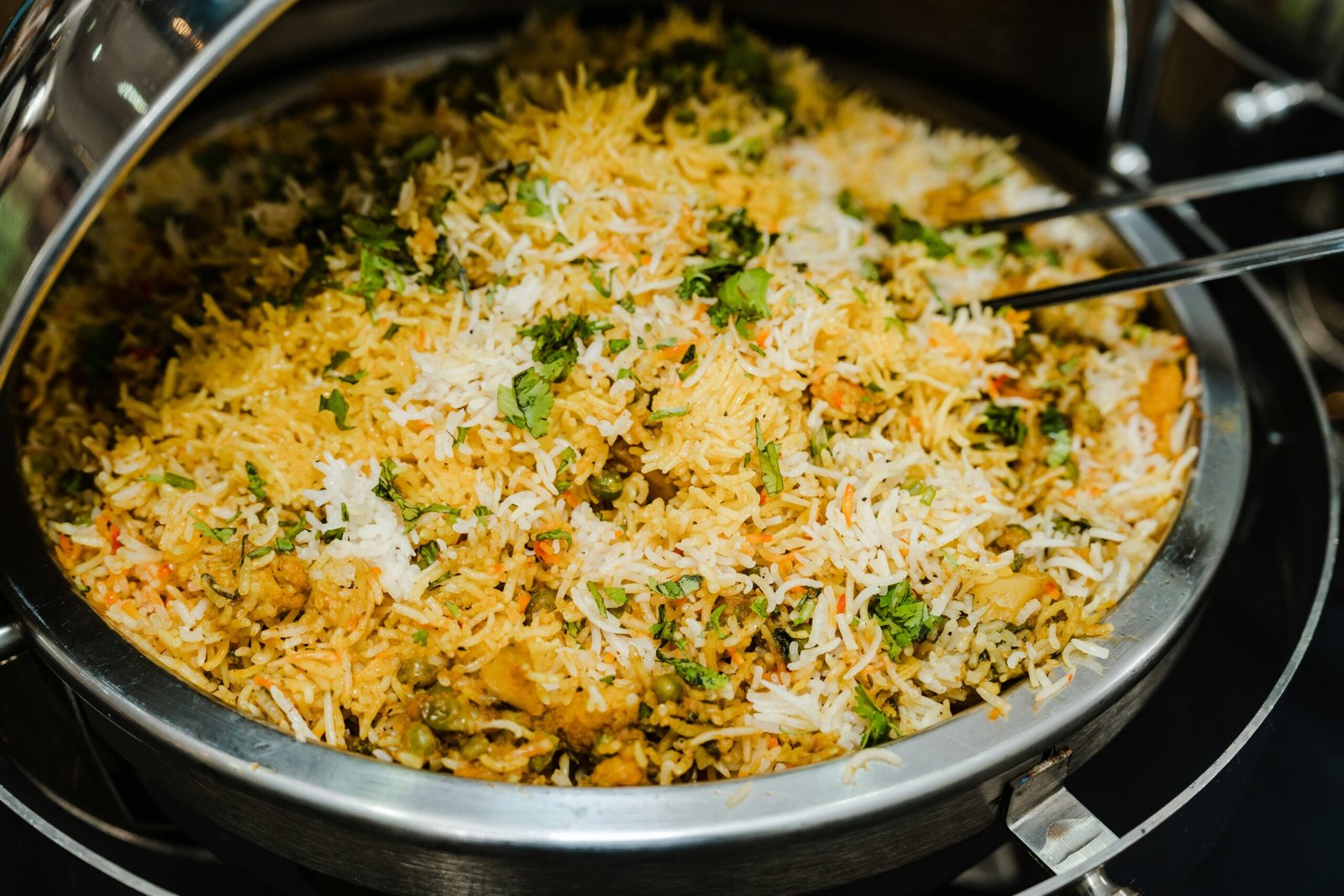
Few dishes evoke celebration, comfort, and nostalgia all at once like biryani — the so-called “Queen of South Asian Cuisine.” Biryani has become an ambassador of flavour. Its layered rice, spiced meat, and fragrant herbs symbolize both opulence and home cooking.
Though historians debate its exact birthplace, most trace biryani’s roots to Persian and Mughal kitchens of medieval South Asia. Persian “birinj” (rice) dishes and Central Asian pilafs likely merged with local South Asian spices and cooking styles during the Mughal era, giving birth to a dish that spread across the region. Over centuries, every city and household adapted it — sometimes fiery and tangy, sometimes mellow and aromatic — but always celebratory.
Today, biryani is a global comfort food, equally at home in a festival feast or a weekday dinner. Making it at home is easier than many assume; all it demands is patience, fragrance, and respect for layering — the secret that defines a good biryani from the rest.
Before You Begin: Pre-Cook Essentials
Cooking biryani successfully at home depends less on advanced technique and more on timing, preparation, and ingredient choice.
- Choose the right rice:
Use aged long-grain basmati rice for fragrance and length. Fresh rice releases starch and clumps. Soak the rice for 30–45 minutes before cooking — this helps achieve fluffy, separate grains. - Select the protein:
Traditional biryani uses chicken, mutton, beef, or seafood. Chicken is ideal for beginners as it cooks faster and absorbs flavor easily. Vegetarian versions (with paneer or mixed vegetables) use the same base. - Use a heavy pot:
A thick-bottomed pot or Dutch oven helps prevent burning during the “dum” (slow-cooking) stage. Thin pans can scorch the rice and ruin the layering. - Prepare your mise en place:
Measure and line up all spices, onions, herbs, and liquids before you start. Biryani moves quickly once the cooking begins.
The Standard Chicken Biryani Recipe
Serves: 6
Cooking Time: 1 hour (plus marination)
Ingredients
For the rice:
2 cups basmati rice (aged and soaked for 30–45 minutes)
6 cups water
1 bay leaf
4 cloves
2 cardamom pods
1 small cinnamon stick
1 tsp salt
For the chicken marinade:
1 kg chicken pieces (bone-in preferred)
1 cup plain yogurt
2 tbsp ginger-garlic paste
1½ tsp red chili powder
½ tsp turmeric
2 tsp garam masala or biryani masala
Salt to taste
Juice of 1 lemon
½ cup fried onions (store-bought or homemade)
Handful chopped mint and coriander leaves
For layering and cooking:
4 tbsp ghee or vegetable oil
2 medium onions, sliced and browned
Few strands saffron soaked in ¼ cup warm milk (optional)
2–3 green chilies, slit
Remaining mint and coriander leaves
Preparation Steps
Step 1 — Marinate the chicken
In a bowl, combine yogurt, ginger-garlic paste, chili powder, turmeric, garam masala, lemon juice, salt, fried onions, mint, and coriander. Add chicken, mix thoroughly, cover, and refrigerate for at least 1 hour (overnight for best flavor).
Step 2 — Parboil the rice
Bring water to a boil with salt and whole spices. Add soaked rice and cook until 70% done — the grains should still be firm in the center. Drain immediately and spread on a tray to prevent sticking.
Step 3 — Sear and layer
In a heavy pot, heat ghee or oil. Add the marinated chicken and cook on medium heat for 10–12 minutes until the meat is partly cooked and the yogurt thickens into a rich masala.
Remove half the chicken mixture and set aside. Spread half the rice over the remaining chicken in the pot. Sprinkle mint, coriander, and green chilies. Add the rest of the chicken and top with the remaining rice. Drizzle saffron milk over the top if using.
Step 4 — Dum (slow cook)
Cover the lid tightly (seal edges with dough or a damp cloth for authenticity). Cook on low heat for 20–25 minutes. You can place a flat griddle under the pot to distribute heat evenly.
Step 5 — Rest and serve
Let it rest for 10 minutes before opening. Gently fluff from the sides to keep rice grains separate. Garnish with fried onions, mint, and serve hot with raita (spiced yogurt) or salad.
Pro Tips from Traditional Cooks
Balance moisture: Too much liquid leads to soggy rice; too little dries it out. If unsure, add a spoonful of warm milk before sealing.
Onion control: Fried onions add sweetness and color; caramelize them patiently rather than burning.
Spices bloom better in fat: Toast your whole spices briefly in ghee before layering.
Let it rest: Resting after cooking allows steam to redistribute — essential for even texture.
Health and Nutrition Information
Biryani is indulgent, but when cooked thoughtfully it can fit comfortably into a balanced diet.
- Nutritional Snapshot (per average serving, ~300 g)
- Calories: 450–550 kcal
- Protein: 25–30 g
- Carbohydrates: 50–60 g
- Fat: 15–25 g (depending on ghee/oil used)
- Sodium: Varies by added salt and spice blends
- Healthy Cooking Adjustment
- Use skinless chicken or lean meats.
- Replace part of the ghee with canola or olive oil to reduce saturated fat.
- Add vegetables (carrots, beans, peas) for fiber and nutrients.
- Serve smaller portions with a side of salad or yogurt rather than extra rice.
- Salt and Fat Awareness
- According to the World Health Organization (WHO), adults should consume less than 5 grams of salt and less than 10% of daily calories from saturated fats per day. Preparing biryani at home lets you control both — something restaurant versions often exceed.
- For Diabetic or Heart-Conscious Eaters
- Research from dietary studies (see National Center for Biotechnology Information, 2023) suggests that moderate rice-based meals like biryani can be part of a balanced diet if portioned correctly and paired with protein and fiber.
- Using brown basmati or mixing with lentils can help stabilize blood glucose.
Additional Notes and Serving Suggestions
- Make-ahead tip: Marinate chicken a day ahead; refrigerate cooked biryani up to 3 days or freeze in portions for a month.
- Reheating: Add 1–2 tablespoons of water or milk, cover, and warm on low heat.
- Pairings: Cucumber-mint raita, onion salad, or pickle complement biryani perfectly.
- Fragrance boosters: A drop of kewra water or rose essence at the end enhances aroma (optional but traditional).
Glossary
Basmati: Mainly Pakistani origin. Aromatic, long-grain rice used for biryani.
Dum: The slow-cooking method that steams the dish in its own moisture.
Ghee: Clarified butter common in South Asian cooking.
Masala: Spice mix or paste used for flavoring.
Raita: Yogurt condiment served to balance heat and richness.
Natural water: Distilled extract from pandanus flowers used for fragrance.
Biryani’s endurance across centuries isn’t just about taste — it’s about ritual. The rhythmic steps of soaking rice, browning onions, layering, and sealing the pot are acts of patience and anticipation. Whether you’re cooking it in Lahore, London, or Los Angeles, biryani unites kitchens through aroma and artistry.
Cooking it at home demystifies what once seemed royal, bringing the “Queen of Biryani” back to her rightful throne — your dining table.



Can you add more pictures here. That would be really helpfull.