





















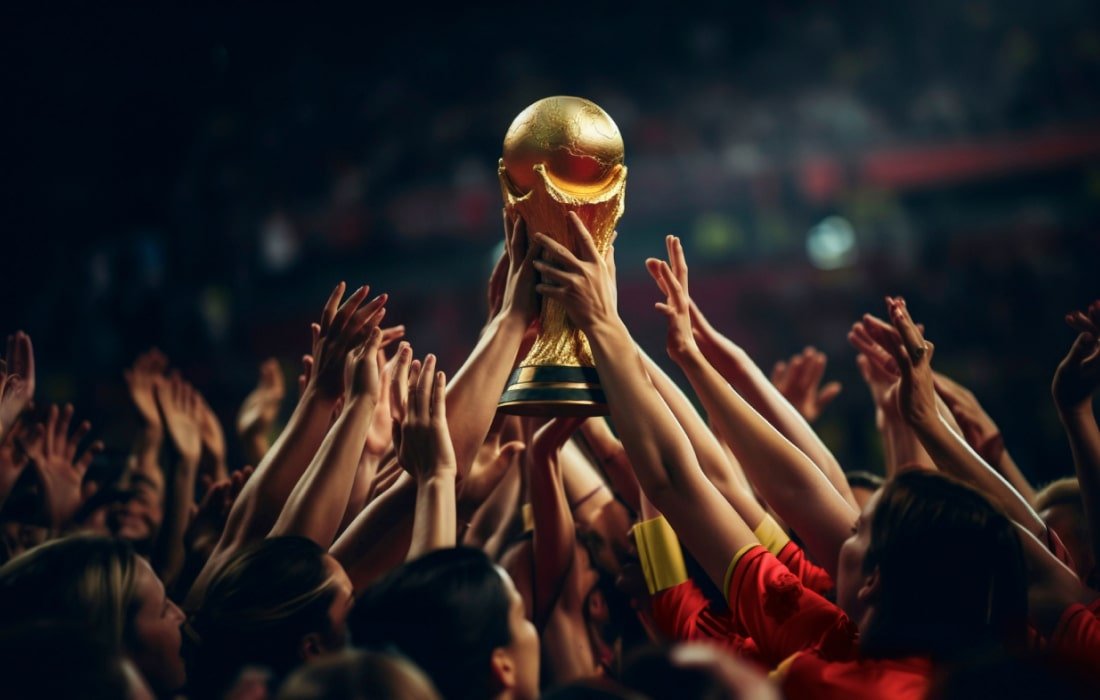
As the world edges closer to the FIFA World Cup 2026, anticipation swells on every continent. From crowded cafés in Europe to bustling streets in South America, conversations pivot toward squad selections, tactical formations, and dreams of glory. The World Cup remains far more than a tournament. It is a festival of identity, emotion, rivalry, and unity — a month where the world stands still to watch the beautiful game unfold.
This edition carries special weight. For the first time, three nations — the United States, Canada, and Mexico — will jointly host the World Cup, marking a historic moment in international sporting cooperation.
Spotlight on the Host Nations
United States
The United States stands at the center of this global stage with immense infrastructure and media power. Hosting major sporting events is not new to America, but the World Cup is a different spectacle entirely. Modernized stadiums — from Los Angeles to New York — are ready to welcome fans from around the world. The U.S. aims not only to host but to elevate the tournament experience with technology-driven fan engagement, global broadcasting capabilities, and record-breaking attendance.
Canada
For Canada, this World Cup represents an opportunity to expand its footballing identity. While ice hockey remains culturally dominant, the rapid rise of Canadian football talent and support has brought new national passion to the sport. Stadiums in Toronto, Vancouver, and Montréal are expected to showcase warm hospitality and a welcoming multicultural spirit. Canada enters this World Cup not just as a host, but as a rising footballing nation determined to prove its competitive progress.
Mexico
Mexico, rich in footballing history and vibrant supporter culture, brings passion and tradition to the tournament. Mexican stadiums are known for unmatched atmosphere — drums, chants, and waves of green shirts filling every stand. Having hosted in 1970 and 1986, Mexico becomes the first country in history to host three World Cups. For many fans, matches played in Mexico will carry a nostalgic echo of footballing greatness.

Participating Nations, Rankings & Past Performances
(Rankings refer to recent FIFA World Rankings and historical World Cup reputation.)
| Nation | Approx. FIFA Rank | Best World Cup Performance |
|---|---|---|
| Brazil | Top 5 | 5-Time Champions (Most in history) |
| Argentina | Top 3 | 3-Time Champions |
| France | Top 5 | 2-Time Champions + Recent Dominance |
| Germany | Top 15 | 4-Time Champions |
| Spain | Top 10 | 2010 Champions |
| England | Top 5 | 1966 Champions |
| Portugal | Top 8 | Semi-finals 1966 / 2006 |
| Netherlands | Top 10 | 3-Time Finalists |
| Belgium | Top 15 | 3rd Place 2018 |
| Mexico | Top 20 | Consistent Round of 16 Contender |
| USA | Top 15 | Quarter-Finals 2002 |
| Canada | Top 40 | Second World Cup Appearance |
| Japan | Top 20 | Consistent Knockout-Stage Competitor |
| South Korea | Top 25 | Semi-Finals 2002 |
| Morocco | Top 15 | Historic Semi-Finalists 2022 |
| Senegal | Top 20 | Quarter-Finalists 2002 |
(Note: Final qualification is ongoing in some regions; rankings listed represent current competitive status.)
Top 10 Footballers Expected to Shine
| Player | Country | Profile |
|---|---|---|
| Kylian Mbappé | France | A generational talent known for explosive pace, World Cup winner at 19, and now one of the game’s global icons. |
| Lionel Messi (if participating) | Argentina | The heart of Argentina’s recent triumph and a living legend whose vision and technique remain unmatched. |
| Erling Haaland* | Norway | Prolific goal-scorer dominating European club football; if Norway qualifies, he becomes one of the tournament’s most feared forwards. |
| Jude Bellingham | England | Midfield prodigy redefining the modern playmaker role; calm under pressure, intelligent beyond his years. |
| Vinícius Júnior | Brazil | Electrifying winger known for speed, flair, and decisive impact in big matches. |
| Kevin De Bruyne | Belgium | Midfield architect known for precise passing and tactical intelligence. |
| Achraf Hakimi | Morocco | Versatile full-back with pace and technical excellence, hero of Morocco’s historic World Cup run. |
| Christian Pulisic | USA | The face of American soccer’s global rise, balancing creativity and determination. |
| Alphonso Davies | Canada | One of the world’s fastest players, symbol of Canada’s football renaissance. |
| Robert Lewandowski | Poland Veteran | striker with world-class finishing; carries immense responsibility for his nation. |
*Haaland participation depends on final qualification results.
International Football Governing Bodies
- FIFA (Fédération Internationale de Football Association) — Global governing body responsible for World Cup organization and rules.
- UEFA — Governs European football competitions and club tournaments like the Champions League.
- CONMEBOL — Governs South American football.
- CONCACAF — Governs North America, Central America, and the Caribbean.
- CAF — Governs African football.
- AFC — Governs Asian football.
- OFC — Governs Oceania football.
Football Structure in the United Kingdom
The UK football system is divided by country:
England:
- Premier League (Top Tier)
- Championship, League One, League Two (Professional Tiers)
- FA oversees national team and domestic competitions.
Scotland:
- Scottish Premiership (Top Tier)
- Scottish FA governs national team.
Wales and Northern Ireland:
- Each has its own national league system and governing association.
All four nations compete separately in international football.
Conclusion: A Tournament to Inspire the World
The FIFA World Cup stands alone — a rare event where nationality, emotion, and cultural pride are celebrated without division. As the world prepares for kickoff, excitement builds not just for the matches, but for the shared moments: the chants, the flags, the last-minute goals, the tears of triumph and heartbreak.
When the whistle blows and the tournament begins, we will not simply watch football.
We will witness history, together.